APROC 2026: Enhancing Interoperability and Forging Personnel Recovery Excellence
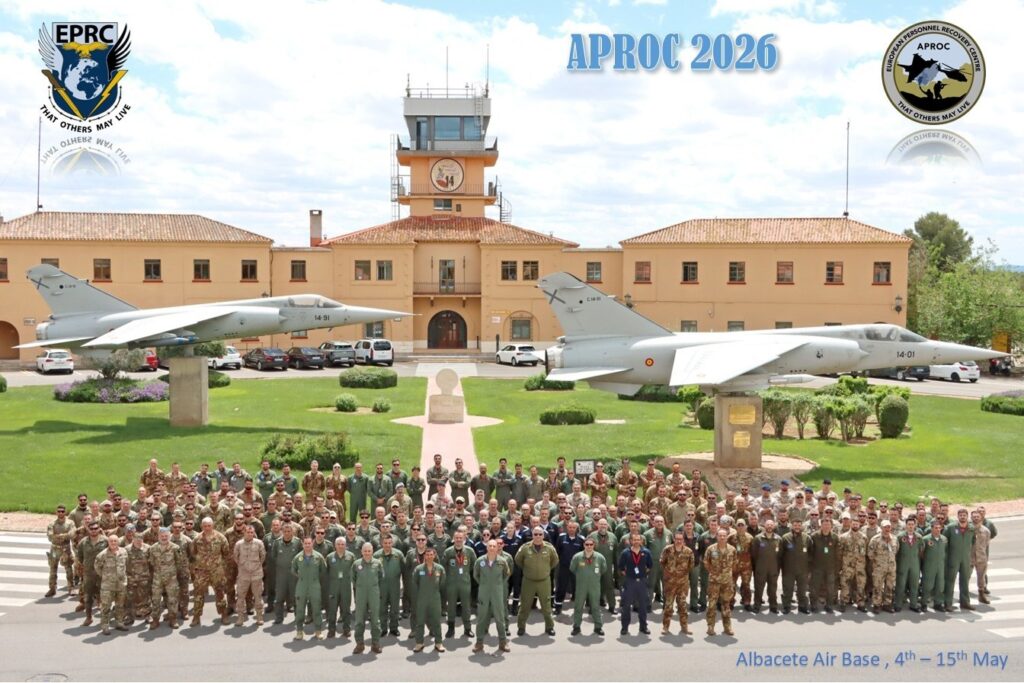
Albacete (Spain) – 4-15 May 2026 – The European Personnel Recovery Centre (EPRC) has successfully conducted the Air centric Operative Personnel Recovery Course 2026 (APROC 2026), reaffirming its pivotal role as the hub for European Personnel Recovery (PR) operational doctrine and tactical synchronization.
This year’s iteration gathered aircrews, extraction forces, intelligence officers, and survival specialists from EPRC Member Nations and partner countries, all driven by a single, vital mission: “That Others May Live.”
Strategic Value and Logistic Resilience in Challenging Times
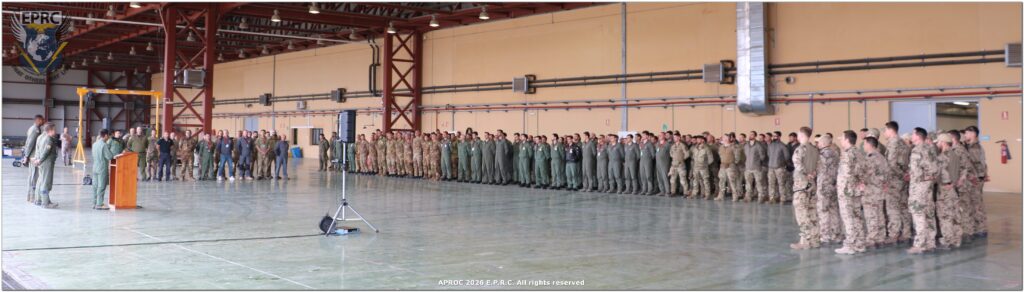
Despite the current highly complex global geopolitical scenario, the successful execution of APROC 2026 has sent a strong signal of unity and readiness. Holding an exercise of this magnitude in such a delicate international context served as a demanding, real-world test not only for the tactical participants but also for the logistical and support frameworks of the involved nations. Managing to deploy, sustain, and integrate complex multinational assets during a period of high operational commitment demonstrated the profound resilience and steadfast dedication of the partner nations to maintaining a robust and reliable Personnel Recovery capability.
Evolution in the Training Environment
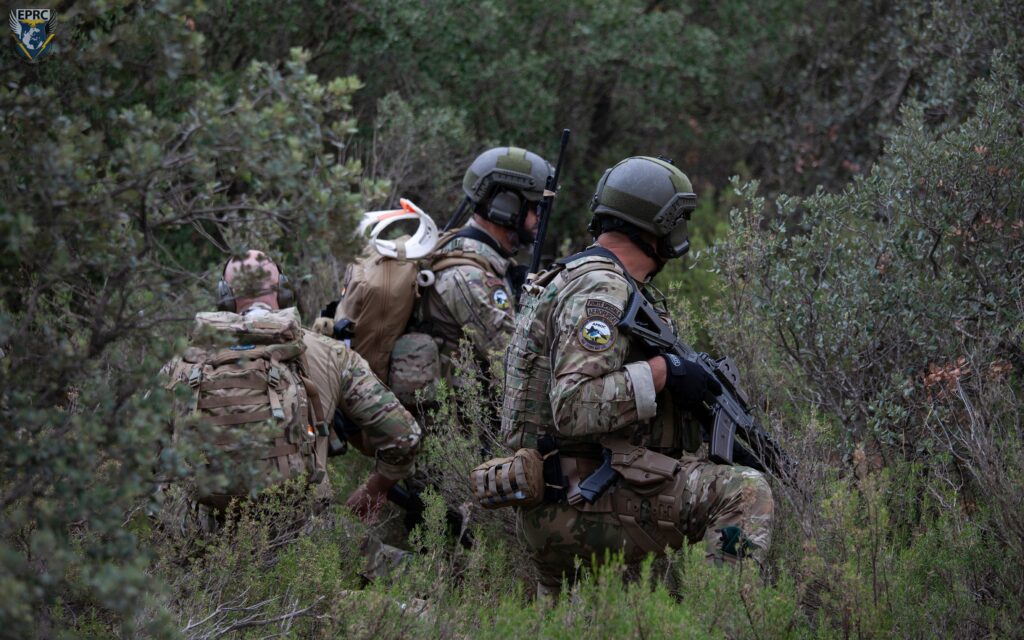
In an era defined by rapidly changing security landscapes, APROC 2026 introduced critical updates to its syllabus, focusing efforts on maximizing the effectiveness of field activities. The in-person academic sessions were structured with a focus tailored specifically to flight and practical activities, ensuring a seamless and immediate transition from theory to the operational phase.
A major pillar of this evolution was the introduction of a new planning concept, entirely based on the structure of a JOPG (Joint Operational Planning Group). This innovative planning cell benefited from strong multinational support, thanks to the essential synergy and cooperation achieved among representatives from key nations such as Canada, Belgium, and France. The JOPG model elevated the application of doctrine, standardizing complex decision-making processes within a joint and combined environment.
Optimizing and streamlining the theoretical sessions, combined with the efficiency of the JOPG cell, allowed the Course Directorate to maximize the most valuable asset: time dedicated to the subsequent execution phase. Within this context, the strategic integration of a preliminary demo-planning for the staff proved to be a game-changer, ensuring that all teams were fully aligned, prepared, and synchronized before the official kickoff of execution operations.
Realistic Execution and Tactical Synergy
The heart of APROC 2026 remained its demanding execution phase. For two weeks, participants were immersed in complex, contested scenarios designed to replicate basic symmetric conflict environments.
The integration of highly realistic training elements proved essential for testing and refining the specific Tactics, Techniques, and Procedures (TTPs) associated with the course.
The success of air and ground operations was ensured by a wide array of capabilities deployed by the participating nations:
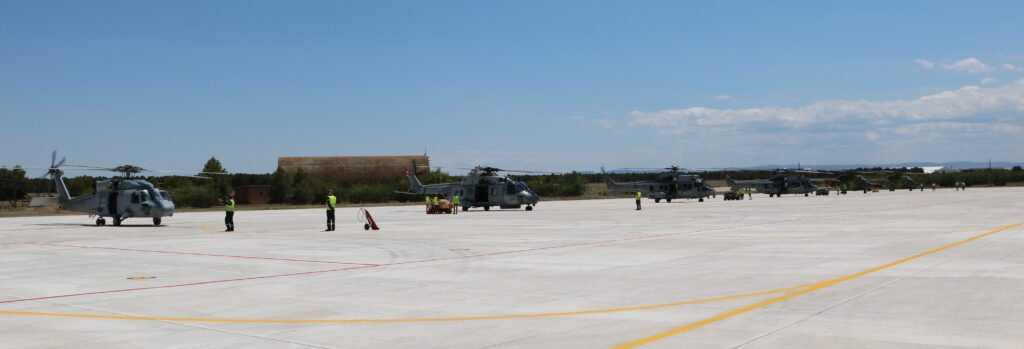
- Recovery Vehicles: MH-101 ITA Navy & NH-90 ESP Army
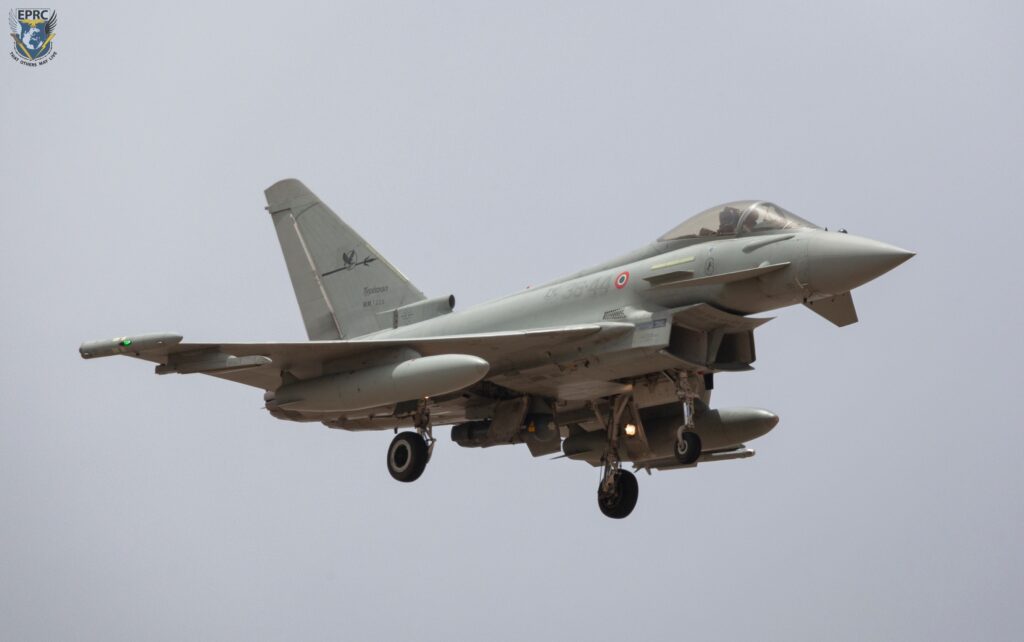
- RESCORT Assets (Fixed-Wing & Rotary-Wing Rescue Escort: 2EF-2000 ITA Air Force, 2 IAR-330 ROU Air Force & EC-665 Tiger ESP Army
- ISR and Command Support (Intelligence, Surveillance, and Reconnaissance): P72 ITA Air Force & MQ-9 Reaper ESP Air Force
- Extraction Forces: Ground teams from Germany, Italy, Spain and Portugal
Throughout the flying days, missions conducted within the dedicated Task Force allowed for the development of complex casualty care scenarios in the field, insertion techniques, and authentication procedures in non-permissive environments.
Looking Ahead: The Future of PR Training
As APROC 2026 comes to a close, the EPRC looks ahead to future training challenges. The objective remains to constantly refine the operational readiness of personnel and the effectiveness of PR directives, ensuring that participants in future courses arrive at the main operating base ready to integrate immediately into high-intensity scenarios, integrating asymmetrical threats too.
The success of APROC 2026 underscores a fundamental truth: Personnel Recovery is not just a capability; it is a moral obligation and a strategic element of paramount importance. Through continuous evolution, shared doctrine, and realistic training, the EPRC and its partner nations remain ready to bring their personnel home, whenever and wherever the call arises.